

Catholic Universities Summer School 2025 – Strengthening Relationships with the World and with Ourselves
The program began with a ceremonial opening; participants were dressed either in traditional folk costumes or in their university T-shirts—for the students, this is an opportunity to highlight their origins and a part of their identity. The summer school brought together students from Catholic universities in Ukraine, Slovakia, Croatia, the United States, Poland, Georgia, and Hungary. Four students—Tymofii Serbin, Kateryna Shapovalenko, Barbora Kopčíková, and Tetiana Adamchuk—are representing the Catholic University in Ružomberok. In addition to Samuel Štefan Mahút, Dean of the Faculty of Arts and Letters at the Catholic University in Ružomberok, the opening ceremony was attended by Željko Tanjić, Rector of the Catholic University of Croatia, and František Trstenský, Bishop of the Diocese of Spiš, who enriched the first days of the program with his presence and lectures.
The main theme of the summer school is “Practicing Resilience – Preparing for Recovery.” Since the first summer school established in Croatia, the focus has always been on Ukraine, which has been suffering from war for four years now. However, the instructors have created a program that is interesting and useful for everyone. The daily lectures combine the fundamentals of psychology, sociology, business, and journalism. Of course, spiritual topics and activities play an important role. “For me personally, there were several very useful lectures—for example, on the factors that determine your resilience, or on the importance of adaptability. In addition, we had the opportunity to participate in various workshops and discussions that broadened our perspective on current social issues,” Tetiana Adamchuk shares her impressions. Another opportunity to showcase their work was the “Capstone project.” Every evening, students met in small groups to work on their topics, such as “The Place of Prayer in Our Lives” (a project in which Timofii Serbin also participated) or “Memorials in My Country.”
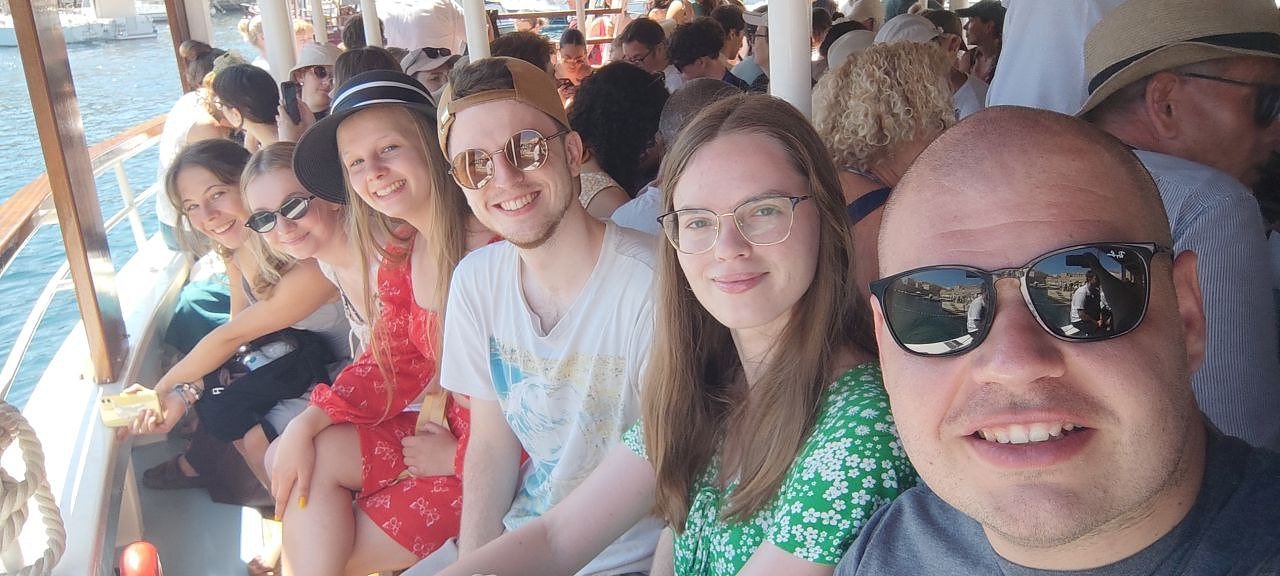
Meanwhile, the participants explored Dubrovnik, basking in the summer sun. The city is the epitome of historical heritage and unique natural beauty. That’s why strolls through the Old Town were so easily combined with trips to the beach and museums. During our evening walks, our Croatian friends loved to talk about the history and contemporary life not only of the city but also of the country. And every day I understood better and better why Dubrovnik has become a favorite destination for filmmakers and celebrities.
The interaction between students from different corners of the world is perhaps the greatest value. The students learned simple phrases in foreign languages, elements of folk dances, and discussed future university collaborations. “Communicating with participants from different countries was one of the most wonderful aspects of the summer school for me. I was particularly pleasantly surprised by its diversity. Everyone brought a different perspective and preferred different topics—some liked to talk about war and politics, others about religion or the school system,” says Barbora Kopčíkova.
One day, the Ukrainian students took the initiative and organized their own workshop, “Stories of Four Students from the War.” Sincerity is always rewarded with sincerity, and so the workshop turned into a discussion about a fundamental question for people from any country: “What is home to me?” “This isn’t the first time I’ve talked to strangers about my experiences since the large-scale invasion began. Many ask me questions; with many, I simply share interesting videos and photos that my relatives send me. For me, it’s important that they listen to me,” explained Tymofii Serbin.
Summer School 2025 strengthened relationships with oneself and others. On the last day, all the students wore T-shirts with the summer school logo—it’s a nice metaphor for the unity that formed among the students over the course of ten days. Each of us is leaving Dubrovnik with unique stories, new acquaintances and knowledge, and above all, with gratitude for everything that happened.
(Katya Shapovalenko)